Home › Road, Street, and Municipal Paving
Partner with a dependable contractor for road paving in Cleveland, OH. We pave subdivision streets, municipal roads, and private access routes with attention to grading, compaction, and smoothness. Our crews handle new construction, widening, and resurfacing projects of various sizes. Contact us to discuss specifications and schedule a detailed road paving estimate.
Precision Asphalt Cleveland provides professional road paving throughout Cleveland, OH, Ohio and the surrounding area. Our licensed, insured crew delivers safe, clean, on-time work with a free estimate before anything begins. Call (216) 455-8661 or request your free quote.
Road, Street, and Municipal Paving in Cleveland, OH
Roads in Northeast Ohio take a beating from freeze-thaw cycles, salt, and heavy traffic. Precision Asphalt Cleveland focuses on building and restoring roadways that hold up to Cleveland winters and busy commutes, not just roads that look good on day one. Our team works with municipalities, public works departments, HOAs, and private road owners to plan and execute paving projects that fit both budget and long-term performance goals.
When we look at a street or municipal roadway, we start by verifying how the road is used. A quiet residential lane that sees school buses twice a day is not designed the same way as a heavy-use cut-through or commercial access road. We factor in axle loads, turning movements at intersections, bus routes, and snow plow patterns so the asphalt structure is sized correctly from the start.
Because we are local to Cleveland, we understand city permitting and coordination. We routinely schedule around RTA bus routes, school hours, and downtown delivery windows to keep traffic moving while work is underway. You get a paving partner who knows the local expectations, from ODOT-related specs to city of Cleveland standards, and can help you navigate them without surprises.
How the Road Paving Process Actually Works
Successful road paving is a sequence of tightly controlled steps. Any shortcut in one stage shows up later as potholes, rutting, or premature cracking. At Precision Asphalt Cleveland, we follow a methodical process that has been refined on local streets, alleys, and municipal projects for years.
1. Evaluation and core sampling: On larger projects we often recommend asphalt cores or test pits. These show the thickness and condition of existing asphalt and base. In Cleveland, many older streets have thin asphalt over clay soil, which needs to be corrected or stabilized before new paving is worth the investment.
2. Milling or full-depth reconstruction: For overlays, we mill a specific depth, usually 1.5 to 3 inches, using a cold planer. This removes rutted or oxidized surface and maintains curb reveal for drainage. On badly failed roads, we may pulverize and regrade the entire asphalt section or remove it to rebuild the base.
3. Subgrade and base preparation: We grade to establish the proper crown or cross-slope so water sheds to catch basins rather than ponding in the wheel paths. In Northeast Ohio, we pay close attention to soft, saturated subgrade. We may undercut and replace unstable soils, use geotextile fabric, or add and compact additional aggregate base to meet design strength.
4. Tack coat application: Before placing new asphalt over existing pavement, we spray a tack coat emulsion. This adhesive layer bonds the new asphalt to the old. Skipping or underapplying tack leads to slippage cracks and delamination, especially on hills and at intersections.
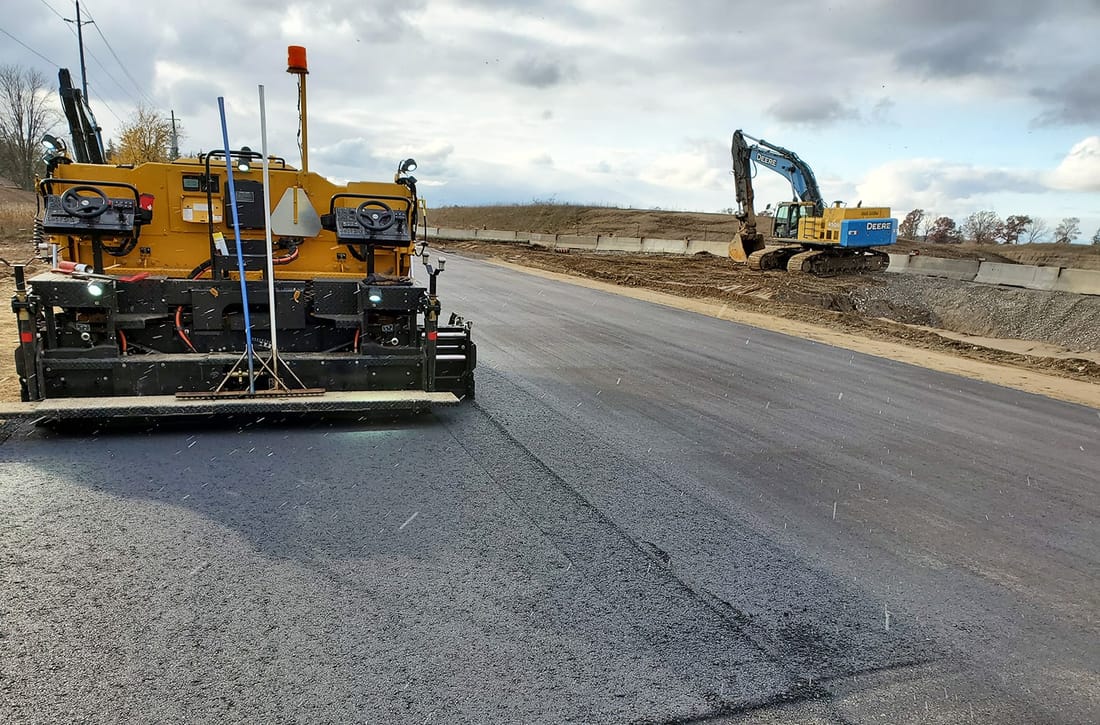
5. Asphalt placement in lifts: We typically use a hot mix asphalt designed for Ohio’s climate and traffic loads, such as ODOT 441 mixes. Asphalt is placed using a paver for consistent thickness, then compacted with steel and pneumatic rollers in multiple passes. For a municipal residential street, we often use a 2-course system, a base course for strength and a surface course designed to resist rutting and cracking.
6. Joint and detail work: Longitudinal and transverse joints are compacted carefully where new asphalt meets old or where paving lanes tie together. We seal exposed joints and adjust manholes, catch basin grates, and valves so they sit flush with the finished surface.
7. Final cleanup and striping: After compaction, we schedule pavement markings, crosswalks, bike lanes, and stop bars. In school zones or high-pedestrian areas, we can coordinate high-visibility marking systems to match your safety priorities.
Material Options and Design Choices for Cleveland Roadways
Not every road paving project in Cleveland needs the same asphalt mix or structural design. Precision Asphalt Cleveland works with you to choose materials that are appropriate for how the road is used and what your long-term maintenance plan looks like.
For residential streets and HOA roads, we usually recommend a surface course that balances smoothness, noise reduction, and durability. Medium-sized aggregates help resist raveling under winter salt and plow blades while still riding comfortably for drivers and cyclists. If your neighborhood has frequent garbage truck traffic or steep grades, we can adjust the mix design or thickness for added strength.
On bus routes, industrial access roads, or streets with frequent heavy trucks, we may specify thicker base courses and high-stability surface mixes. These mixes better resist rutting at intersections and where trucks are braking or turning. In some industrial areas with tight turning radii, we also look at reinforcing problem zones with stronger base or thicker asphalt.
Cleveland’s climate affects mix selection too. We choose performance-graded binders that stay flexible through freeze-thaw cycles and do not become too soft in summer heat. On roads that see a lot of standing water or slow drainage, we may include a slightly coarser surface mix to improve friction and reduce hydroplaning risk.
If your project involves bike lanes, bus stops, or high-visibility pedestrian crossings, we can coordinate specialty surfaces, such as colored coatings applied over the asphalt, and ensure the base asphalt is designed to hold these systems. Throughout design, we explain the tradeoffs between upfront cost, expected lifespan, and maintenance intervals so decision makers can choose a structure that fits both current budgets and future needs.
What Drives the Cost of Road Paving in Cleveland
Road paving costs are driven by several specific factors, and understanding them helps you compare proposals fairly. Precision Asphalt Cleveland provides detailed estimates that break down these elements so you can see where your budget is going.
Project size and layout: Longer continuous stretches are more cost-effective per linear foot than small, broken segments with lots of tie-ins. A short block with many intersecting side streets, driveways, and utility castings involves more handwork and slower progress, which increases labor cost.
Depth of repair: A simple mill and overlay is less expensive than full-depth reconstruction. If cores show that the base is weak or the asphalt is too thin to support traffic, investing in rebuilding now can save repeated patching and resurfacing later.
Traffic control needs: Urban Cleveland streets near schools, hospitals, or busy intersections may require police details, custom detour plans, additional signage, or off-peak working hours. These items can be a significant part of the budget, and we plan them early so they do not create surprises.
Drainage and utility adjustments: Rebuilding or adjusting catch basins, repairing curb and gutter, or replacing trench patches from past utility work will affect the final price. We walk each project with you to identify these items, rather than adding them halfway through the job.
Season and schedule: In Northeast Ohio, the realistic paving window is roughly April through early November, with the best conditions generally from late May through September. Late-season or night work can require different mix temperatures, more complicated logistics, and sometimes premium rates at asphalt plants.
By explaining where costs come from and what options you have, we help city engineers, HOA boards, and property managers make informed decisions instead of just defaulting to the lowest number on paper.
Common Road Problems Here and How We Fix Them
Cleveland’s combination of old infrastructure, clay soils, and harsh winters creates a predictable set of road issues. Precision Asphalt Cleveland focuses on solving the root causes, not just covering up symptoms with thin overlays.
Alligator cracking and potholes: These usually point to base failure or repeated moisture infiltration. On streets with widespread alligator cracking, we avoid just resurfacing. Instead, we remove and replace failed sections, rebuild the base, and only then pave. For isolated potholes, we square-cut, clean, tack, and patch with hot mix or high-quality cold patch depending on the season.
Rutting at intersections and bus stops: Heavy braking and slow-moving trucks or buses cause permanent depressions if the mix or structure is undersized. In these locations, we may mill deeper and install a stiffer base or intermediate course, or adjust the surface mix to one that resists deformation under load.
Edge cracking and shoulder failures: Older residential roads with narrow pavements often show edge cracking where vehicles occasionally drive off the edge. We correct this by widening the structural section, improving shoulder support, or installing a stronger edge detail rather than just filling the cracks.
Ponding water and ice sheets: Poor drainage is one of the fastest ways to destroy asphalt in our climate. When we pave a road or street, we reestablish proper grade, reset utility castings, and, if needed, adjust curb lines or add inlets. On projects where full drainage upgrades are not in the budget, we at least ensure the new surface does not trap additional water.
Utility cut settlement: Cleveland streets often have multiple old utility trenches that sink over time. Before final paving, we identify these areas and may dig out and recompact the trench zones or overlay them with a reinforcing layer so the finished road has an even profile instead of a patchwork of dips and humps.
Planning, Scheduling, and Working With Precision Asphalt Cleveland
Road paving affects residents, businesses, and emergency services, so planning and communication matter as much as the asphalt itself. Precision Asphalt Cleveland partners with you from the earliest planning stage so that the work is predictable and disruptions are kept to a minimum.
We begin by discussing your objectives: extending the life of an existing street for a few years, rebuilding a failing roadway, or bringing a municipal route up to a specific standard. From there, we recommend a scope that fits your budget and timeline. For municipal clients, we can help sequence work across multiple streets so you get the most impact from each construction season.
Scheduling in Cleveland must account for weather. We monitor forecasts closely and avoid placing surface courses when temperatures or rain risk could compromise compaction or bonding. If we need to adjust the schedule to protect pavement quality, we explain the reason and give you updated dates so residents and businesses remain informed.
During construction, we provide clear phasing plans, detour routes, and notices. For HOAs or private roads, we supply simple communication pieces you can share with homeowners so they know when to move vehicles, how long access will be limited, and what to expect after paving is complete.
If you are considering a road paving project in Cleveland, OH, and want a contractor who understands both the technical side of asphalt and the realities of working in busy neighborhoods and city streets, Precision Asphalt Cleveland is available to review your roads, discuss options, and prepare a detailed, practical proposal.