Home › Industrial and Heavy-Duty Asphalt Paving
Support your operations with industrial asphalt paving in Cleveland, OH designed for heavy loads and constant traffic. We build thick section pavements for truck yards, loading docks, and warehouse lots with proper base and compaction. Our team can phase work to minimize downtime around your facility. Contact us to review your load requirements and receive a tailored paving proposal.
Precision Asphalt Cleveland provides professional industrial asphalt paving throughout Cleveland, OH, Ohio and the surrounding area. Our licensed, insured crew delivers safe, clean, on-time work with a free estimate before anything begins. Call (216) 455-8661 or request your free quote.
Industrial Asphalt Paving for Heavy Loads in Cleveland
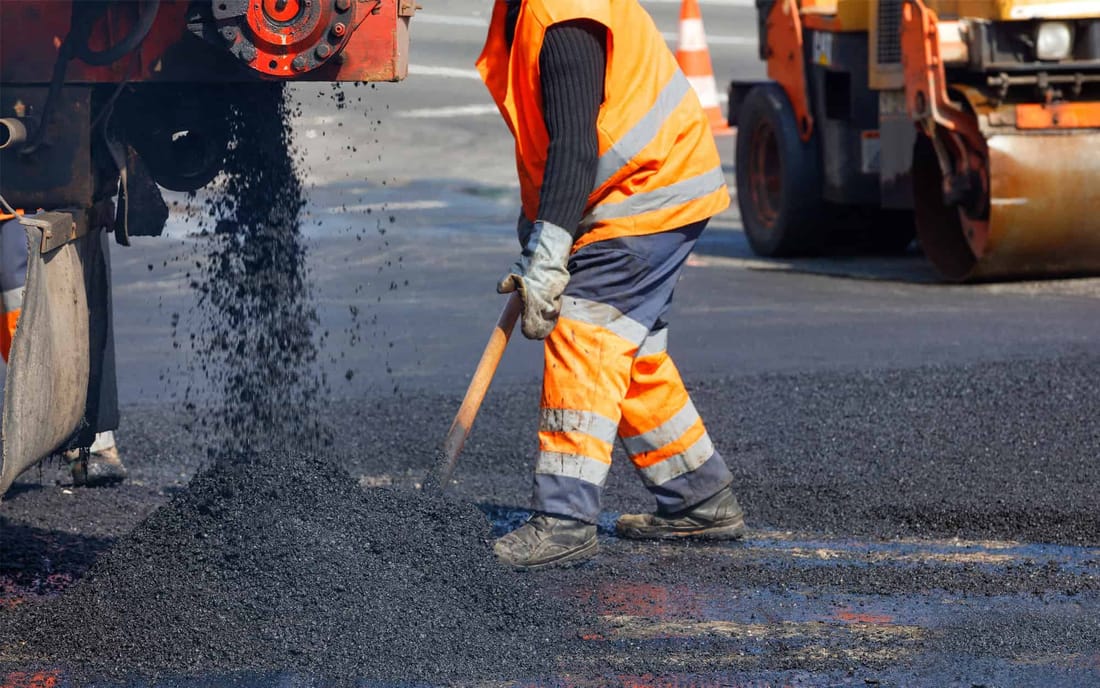
Precision Asphalt Cleveland specializes in industrial asphalt paving that stands up to real abuse from trucks, forklifts, container loads, and continuous production traffic. We design every pavement structure around what you actually run on it, from 53-foot semis backing into docks on West 130th to forklifts turning in tight warehouse aprons in Euclid.
For industrial and heavy-duty asphalt paving, we focus on three things: load, frequency, and subgrade. Load is the weight and tire type of your traffic. Frequency is how often that traffic moves, including peak usage during shift changes or seasonal rush periods. Subgrade is the strength and drainage of the soil under your pavement, which in Cleveland is often a mix of clay, fill, and old construction debris that must be evaluated carefully. We build pavements that match these realities, not generic parking lot standards.
How We Design Heavy-Duty Asphalt Pavements
A proper industrial asphalt pavement is a layered system, not just a thick black surface. Our typical Cleveland industrial section starts with a compacted subgrade that meets a specific density requirement. If we find weak or saturated soils, we may undercut and replace with crushed aggregate or use a stabilization method to keep the base from pumping under truck traffic.
On top of that base, we install multiple asphalt lifts with different mix designs for each layer. A common design for a heavy truck loading area might be 6 to 8 inches of compacted aggregate base, 3 to 4 inches of binder course using a larger stone mix for strength, and 1.5 to 2 inches of surface course with a tighter, more durable aggregate and polymer modified binder. Thicker or reinforced sections are used for container stacks, dump truck scales, and bus yards.
We adjust design based on use zones. For example, drive lanes and loading docks get heavier sections than employee parking rows, which saves money without sacrificing performance. We can also integrate geotextile fabric or geogrid in areas with problematic soils, which is common in older industrial sites along the Cuyahoga River and near the lake where fill material varies widely.
Step-by-Step Industrial Paving Process
Every industrial asphalt paving project with Precision Asphalt Cleveland follows a specific process so that the pavement performs from day one.
First, we perform a site evaluation, which can include test pits or proof rolling with loaded trucks to see how the subgrade behaves. This is where we often discover soft spots from old underground utilities, demolition backfill, or poor drainage. We mark areas needing undercut or stabilization and discuss options and costs with you before work begins.
Next, we handle removals and grading. For new construction, we shape the subgrade to the design elevations, making sure we achieve proper slope away from buildings and towards catch basins. For mill and overlay projects, we precisely mill existing asphalt to maintain door thresholds, dock heights, and rail crossings. In Cleveland, there are many older manufacturing buildings with low thresholds, so elevation management is critical.
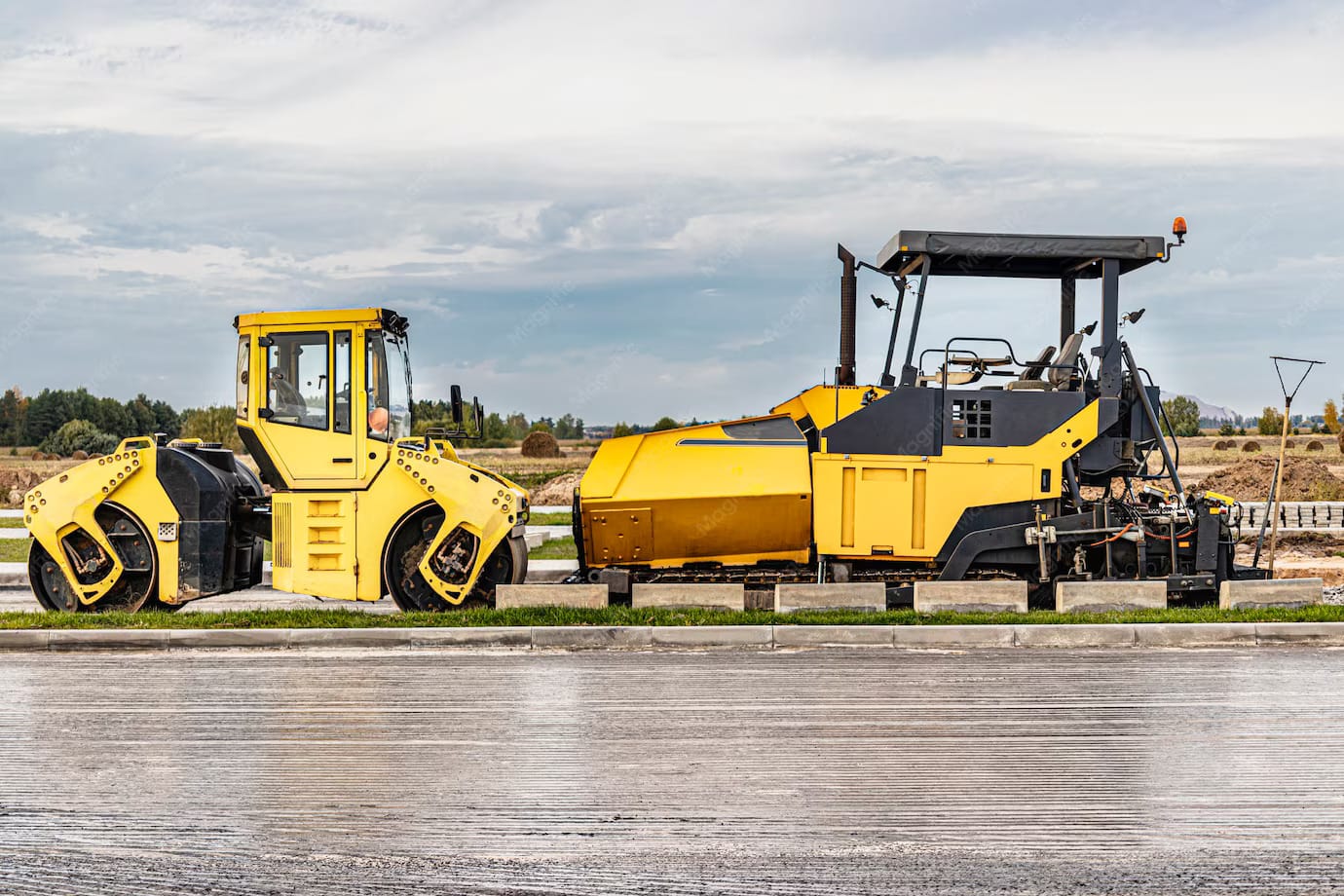
Then we place and compact the aggregate base and asphalt lifts. We use vibratory rollers for base and binder courses, then finish rollers for smooth surfaces. Joint placement, overlapping passes, and compaction temperature control are strictly monitored so heavy truck traffic does not create early rutting at seams.
Finally, we handle striping, wheel stop placement, dock transition details, and any specialty markings like truck route arrows, fire lanes, or numbered dock positions. We schedule this work around your production to minimize downtime, often working nights or weekends so your operation stays on track.
Material Choices for High-Stress Pavements
Industrial asphalt paving is not a one-mix-fits-all job. We select specific material options depending on your site conditions and abuse levels.
For high-load areas such as loading docks, transfer stations, scrap yards, and distribution hubs along I-480 and I-90, we often recommend a polymer modified surface mix. This type of asphalt binder resists rutting and shoving from slow-moving, turning trucks and forklifts. In freeze-thaw conditions typical of Cleveland winters, the added elasticity helps reduce cracking from temperature cycles.
We also pay close attention to aggregate selection. Hard, angular stone blended correctly into the mix carries the load and resists polishing under steel wheels or solid forklift tires. In waste and scrap operations where metal edges and tracked equipment are common, we may adjust aggregate gradations to achieve a tougher, thicker wearing course.
For facilities that handle oils, fuels, or industrial chemicals, we design pavements with better resistance to softening and include detailed plans for drainage and containment. While asphalt is petroleum based, we can extend life by using high-stability mixes and sealing procedures that limit surface penetration in spill-prone zones such as fueling islands and tanker loading stations.
Cost Drivers and How to Control Your Budget
Industrial asphalt paving costs are driven by more than just square footage. The main factors are pavement thickness, base preparation, drainage, and access constraints.
Thickness and structure are directly tied to the type and volume of traffic. A light-duty employee parking area may need only 4 to 5 inches of asphalt over a standard base, while a heavy truck court may require 7 to 9 inches of asphalt over a reinforced base. That difference in tonnage significantly impacts price. We often engineer variable sections so you pay for heavy-duty pavement only where you truly need it, such as around loading docks, dumpsters, and drive aisles.
Base work can either control cost or blow a budget. Many Cleveland industrial sites have unknown fill from older construction. If you skip proper investigation, you may be surprised by soft pockets discovered after demolition. Our approach is to identify likely problem zones early, plan allowances, and give you options such as full undercut and replace, cement or lime stabilization, or the use of geogrid to bridge weak soils.
Drainage and access also matter. Additional catch basins, trench drains at doors, and reworking existing storm structures add cost but are essential to pavement life. Tight sites, overhead utilities, and the need to keep traffic flowing may require smaller equipment and more phases, which impacts labor. We explain these factors clearly so you understand where your money is going and how phase planning can reduce disruption and overtime costs.
Common Industrial Pavement Problems We Solve
Cleveland’s industrial pavements frequently suffer from a predictable set of issues: deep rutting in truck lanes, heaving and cracking from freeze-thaw cycles, chronic ponding near docks, and edge failures where pavement meets gravel or broken concrete.
Rutting and shoving at stop points, such as scale approaches and dock doors, usually come from under-designed pavement or poor compaction in the binder course. We correct these by milling out the failed zones, rebuilding the base if needed, and installing high-stability asphalt mixes with proper thickness. For extreme conditions, we may recommend reinforced concrete pads at specific impact points tied into the surrounding asphalt.
Freeze-thaw damage in Cleveland’s clay soils often shows up as alligator cracking and potholes, especially where water is trapped. Our repairs focus on eliminating the source of moisture first, whether that means regrading, installing subdrains, or adjusting downspout discharge. Then we perform full-depth patching with dense graded base and asphalt, followed by crack sealing and surface treatments if the rest of the pavement is structurally sound.
Edge failures are common where heavy trucks transition from asphalt to gravel yards or unpaved areas. We address this by creating wider, reinforced edges, sometimes with thickened asphalt sections or concrete edge beams, and by cleaning up transitions so tires do not continually break off the pavement edge.
What Cleveland Facility Managers Should Ask Before Hiring
Before you hire any contractor for industrial asphalt paving, you should expect clear answers to a few key questions.
Ask how they determine pavement thickness and whether they are using actual truck counts, axle loads, and turning patterns for your operation. A one-size-fits-all spec is a red flag for industrial sites. At Precision Asphalt Cleveland, we design around your specific loading, including the direction of truck travel, turning radii, and stacking areas.
Ask about compaction targets and testing. For heavy-duty applications, achieving specified density in both base and asphalt layers is non negotiable. We use rollers sized for industrial work and can arrange density testing on request, especially for high-value areas like main truck courts and shipping aprons.
Ask how they will maintain your access during construction. In active Cleveland facilities, we routinely phase work to keep at least some docks open, use temporary stone ramps, and coordinate with shipping schedules to avoid peak times. You should see a written phasing plan that considers your shift changes and critical shipping windows.
Finally, ask for examples of comparable projects in Northeast Ohio, such as distribution centers, manufacturing plants, or municipal service yards. An industrial paving contractor should be able to explain what they did on those projects, what challenges came up, and how they adapted, not just show pretty finished photos. That level of transparency is what Precision Asphalt Cleveland provides on every heavy-duty paving job.