Home › Commercial Gravel-to-Asphalt Conversions
Upgrade rough gravel areas with commercial gravel to asphalt conversions in Cleveland, OH. We transform dusty, uneven lots and drives into smooth, professional asphalt surfaces that are easier to maintain. Our process includes grading, compaction, drainage improvements, and quality paving. Contact us to review your site and receive a detailed conversion estimate.
Precision Asphalt Cleveland provides professional commercial gravel to asphalt throughout Cleveland, OH, Ohio and the surrounding area. Our licensed, insured crew delivers safe, clean, on-time work with a free estimate before anything begins. Call (216) 455-8661 or request your free quote.
Commercial Gravel-to-Asphalt Conversions in Cleveland, OH
Loose gravel is fine for a temporary lot, but most commercial properties in Cleveland eventually need a hard, clean surface that can handle real traffic and weather. Precision Asphalt Cleveland focuses on turning rough gravel areas into durable asphalt parking lots and access roads that look professional and are easier to maintain.
When we talk about commercial gravel to asphalt conversions, we mean taking an existing gravel or millings lot, evaluating the base underneath, correcting drainage, and installing a proper asphalt section that meets the load needs for your specific site. That might be a small retail parking lot off Lorain Avenue, a trucking yard near I-480, or an employee lot in an industrial park in Brooklyn or Parma.
Our team is used to dealing with Northeast Ohio conditions: lake-effect snow, freeze-thaw cycles, and the rutting and potholes that show up every spring. We design each conversion to account for plow trucks, salt, heavy delivery traffic, and tight access points. The goal is not just to put blacktop over stone, but to build a pavement structure that will stay smooth, drain well, and last.
How We Convert Your Gravel Lot to Asphalt
A good commercial gravel to asphalt project in Cleveland starts with a solid assessment. We walk the site, check how water moves, look at rutting and soft spots, and note where trucks turn and stop. We also mark utilities and access points so nothing gets damaged or blocked. If you have past problems with standing water or mud, this is when we dig into those details.
Next, we strip or regrade the existing gravel. Sometimes we can reuse a lot of your existing stone. We proof-roll the area with a loaded truck or roller to locate weak areas. Soft spots are undercut and replaced with new aggregate, typically a crushed limestone base that compacts tightly. For heavy truck areas, we often increase base depth to reduce future rutting.
Once the base is corrected, we shape the slope for drainage. In Cleveland, we watch for water running toward buildings or neighboring properties and adjust grades so surface water heads toward catch basins, swales, or the street. If drainage is poor, we may recommend additional catch basins, trench drains, or underdrain in known problem spots.
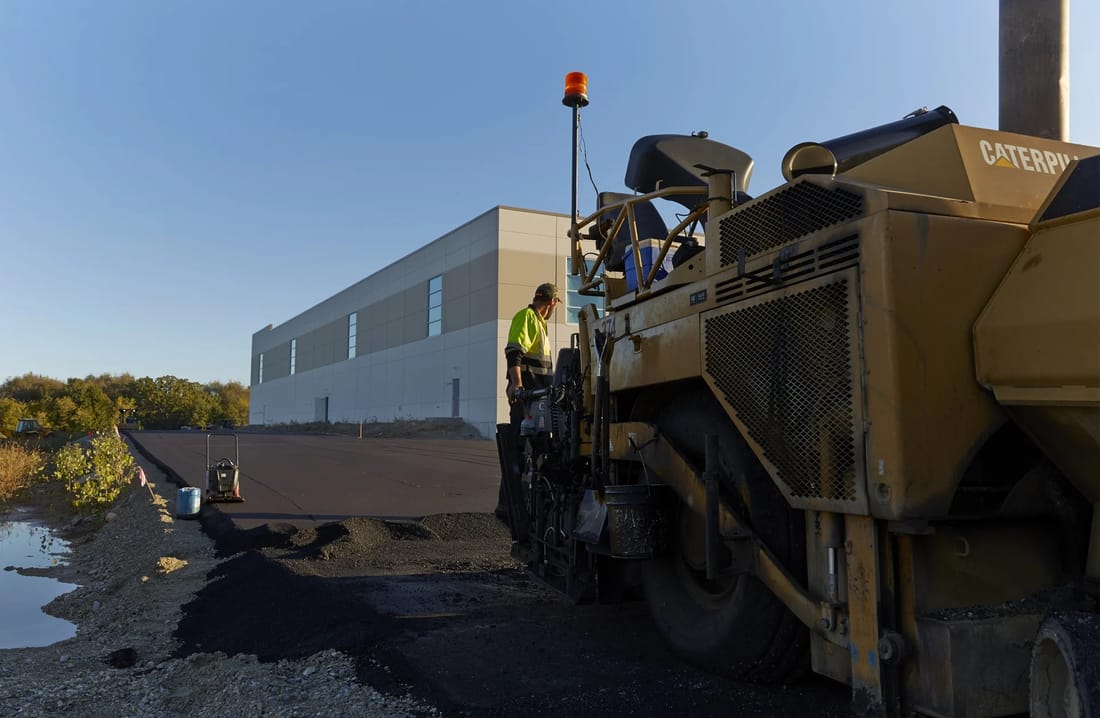
After grading, we compact the base with a vibratory roller until it is firm and unyielding underfoot. Only then do we pave. Most commercial gravel to asphalt conversions get a multi-layer asphalt section: a thicker, coarse binder course for strength, topped with a finer surface course for smoothness and appearance. The thickness depends on your traffic, but in Cleveland retail or office lots we typically see 2 to 3 inches of asphalt over 6 to 8 inches of base, and more for truck areas.
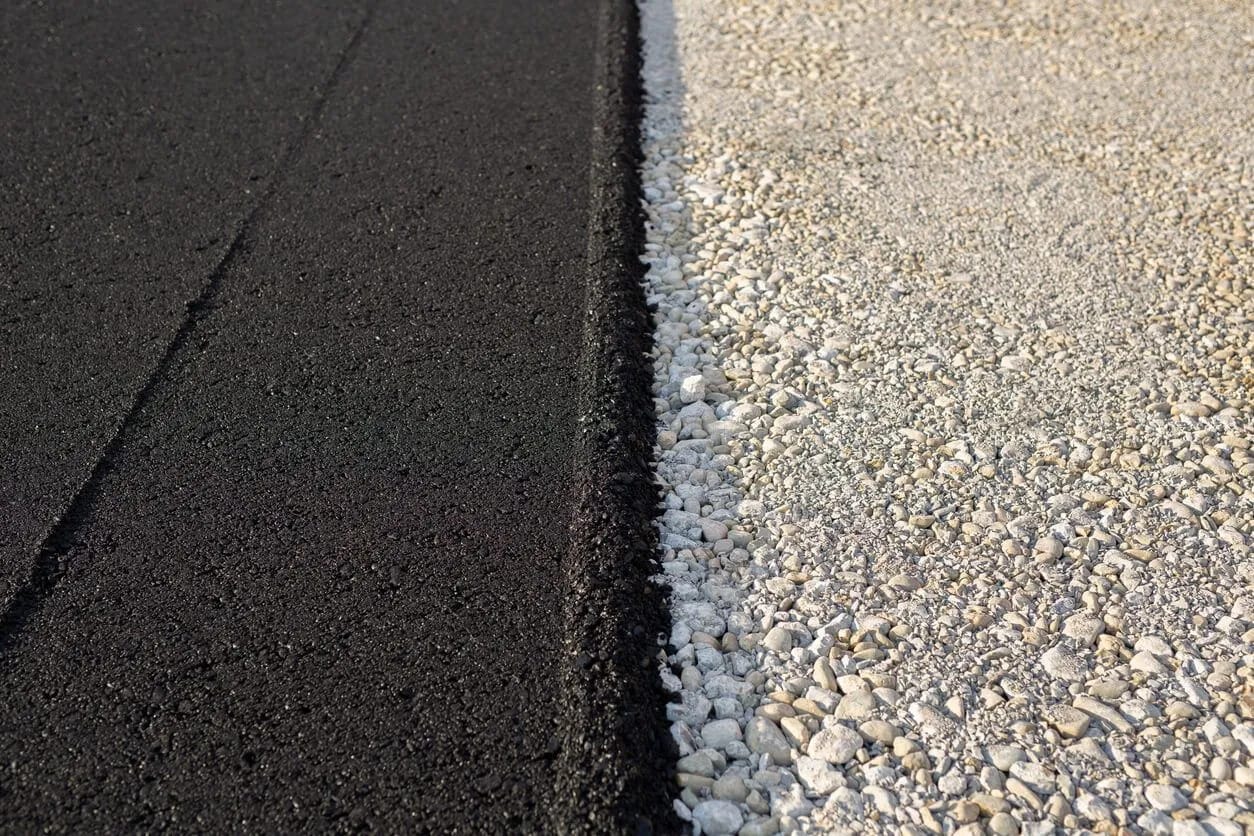
We finish by rolling the asphalt to achieve proper density, cutting neat edges along curbs or stone shoulders, and installing striping and any wheel stops or signage you need so the lot is ready to use.
Design Options for Commercial Lots and Drives
A big part of commercial gravel to asphalt work is layout and design. For existing gravel lots, we often adjust traffic flow, parking counts, and access points to make better use of the space. Precision Asphalt Cleveland can help you reconfigure a loose, unmarked gravel yard into a lined parking lot that meets your business needs and local standards.
You can choose between a standard duty pavement section for light cars and pickup trucks, or a heavy duty section for frequent semi loading, dumpsters, and delivery trucks. Heavy duty areas near docks or dumpsters can get thicker asphalt or even a reinforced concrete pad tied into the asphalt so you do not get deep ruts where trucks sit and turn.
We also talk about surface options. Most commercial properties in Cleveland go with traditional black hot mix asphalt, but we can add high-contrast striping, ADA-compliant markings, and, where appropriate, different colored paint to clearly separate customer parking, employee parking, and loading or fire lanes. For properties that struggle with runoff, we can discuss drainage improvements during the conversion rather than after the fact.
Lighting bases, sign posts, curbing, and islands are part of the design conversation too. If your gravel lot currently has no defined entrances or pedestrian routes, we can add concrete sidewalks, curb islands, and bump-outs to make traffic safer and more controlled. These details matter in busy retail centers, churches, schools, and medical offices around Cleveland where pedestrians and vehicles mix all day.
Costs, Timing, and Common Gravel Lot Problems
The cost of a commercial gravel to asphalt conversion in Cleveland depends on a few main items: how strong or weak your existing base is, how much regrading or drainage work is required, the total square footage, and the asphalt thickness the site needs. Soft, pumping areas and poor drainage add to cost because they require excavation and more stone or drainage materials. Projects that handle frequent semi traffic or buses need thicker sections, which also affects the budget.
We are straightforward about these factors during the estimate. Precision Asphalt Cleveland will usually give you at least one or two cost options, for example a standard section for passenger vehicles and an upgraded design for mixed truck and car traffic. We also factor in access requirements so your business can stay open where possible, phasing the work in sections or scheduling for off-hours or weekends when practical.
Common problems we see when converting gravel to asphalt in this area include buried organic material that causes soft spots, poor drainage along building foundations, and unmarked or shallow utilities that were installed after the gravel went down. We deal with these by probing and test digging suspected problem areas before paving seasonally, adjusting grades to protect foundations, and coordinating utility location and depth checks.
Another Cleveland-specific issue is freeze-thaw damage. If water is trapped in the base because the lot was not graded or drained correctly, the pavement will heave and crack in winter. That is why we stress proper base prep, slopes, and drainage during the conversion. Spending a bit more on drainage correction during the project usually saves you a lot of money in repairs later.
What Cleveland Property Owners Should Know Before Hiring
Before you hire anyone for a commercial gravel to asphalt conversion, it helps to walk your property with a critical eye. Note where you see standing water after a storm, where delivery trucks drive and park, and where employees or customers walk. Those details should be part of the discussion, not an afterthought. Bring any past repair records or drainage complaints to your meeting with Precision Asphalt Cleveland so we can address them in the design.
Ask how the contractor plans to verify the base. If the answer is simply, "We will roll it and pave," that is a red flag. You want a crew that will proof-roll, undercut soft spots as needed, and talk openly about base depth and material. In Cleveland, a lot of older gravel yards were built informally over fill, so base corrections are common and should be discussed up front.
You should also clarify permits and city requirements. Many Cleveland and Cuyahoga County jurisdictions have rules for commercial parking lots, including drainage, ADA access, and sometimes minimum parking counts or landscaping. We are familiar with local standards and can coordinate with your engineer or architect if your project requires stamped drawings or site plan approval.
Finally, talk about long-term maintenance before the job is awarded. A good commercial gravel to asphalt project includes a realistic plan for sealcoating, crack filling, and line re-striping over the first 5 to 10 years. We explain how traffic patterns, snow plowing methods, and deicing choices (like rock salt or brine) will affect the life of your new asphalt. That way you know what to expect from day one and can budget for upkeep, not just the initial conversion.